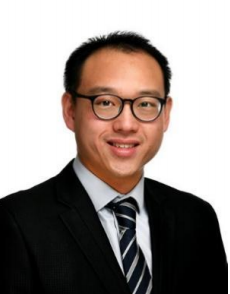
Prof Prof. Chun Sing Lai🎓︎ Tianjin University Bio:Professor Lai has several key positions in standards development namely, Vice-Chair ofStandards Committee, IEEE Computational Intelligence Society (Since 2025);Corresponding Member of IEEE TAB Committee on Standards (Since 2024); Member ofStandards Committee, IEEE Consumer Technology Society (Since 2024) and Vice-Chair ofStandards Committee, IEEE Systems, Man, and Cybernetics Society (Since 2020).Professor Lai was a Working Group Member of IEEE 2660.1 Recommended Practice forIndustrial Agents: Integration of Software Agents and Low-Level Automation Functions, IEEEIndustrial Electronics Society (Since 11/2015-2020). He was a Session Chair for the SST-10Challenges and opportunities in smart grid operation in the IEEE International Conferenceon Industrial Informatics (INDIN) 2015. He organised the workshop on Smart Grid and SmartCity, IEEE Systems, Man, and Cybernetics (SMC) 2017 in Canada and a workshop onBlockchain for Smart Grid, IEEE SMC 2018 in Japan. He was a Publications Co-Chair forIEEE International Smart Cities Conference ISC2 (2020 and 2021). Professor Lai was also aTechnical Program Co-Chair for 2022 IEEE International Smart Cities Conference. He wasConference Chair for the 2024 5thInternational Conference on Intelligent Computing andHuman-Computer Interaction, technically sponsored by the IEEE. He was a member of theInternational Advisory Committee of the 4thInternational Conference on Smart City andGreen Energy, Sydney, Australia. He was a keynote speaker for the 2025 InternationalConference on Advanced Machine Learning and Data Science (AMLDS 2025), Toyko, Japan.He is Conference Chair of the 2026 7th International Conference on Clean Energy andElectric Power Engineering (ICCEPE 2026), Tianjin, China. He is Vice-Chair of the IEEESmart Cities Publications Committee and was Editor-in-Chief of the IEEE Smart CitiesNewsletter. He is a Senior Editor for IEEE Transactions on Consumer Electronics (Impactfactor 10.9, 2024), an Associate Editor for IEEE Transactions on Systems, Man, andCybernetics: Systems and IET Energy Conversion and Economics. He is the Working GroupChair for IEEE P2814 (IEEE SA approved the standard completion in December 2025) andP3166 Standards, Chair of the IEEE/SMCS Intelligent Power and Energy Systems TechnicalCommittee and Member of Board of Governor, IEEE/SMCS. He was an Associate VicePresident, Systems Science and Engineering of the IEEE/SMC Society.Professor Lai was a recipient of the best paper award in the 2020 IEEE International SmartCities Conference. He was a recipient of the 2022 Meritorious Service Award from the IEEESMC Society for "meritorious and significant service to IEEE SMC Society technical activitiesand standards development". He received the IEEE Most Active SMC Technical CommitteeAward: Systems Science and Engineering, October 2024 (no more than one award per year).At the 2024 IEEE International Conference on Consumer Electronics (ICCE 2025), held inJanuary 2025 in the USA, Professor Lai was awarded first place in the Chester W. SallMemorial Awards by the IEEE Consumer Technology Society. He was awarded a Certificateof Achievement for the Best Associate Editor Award 2024, the IEEE Transactions onConsumer Electronics and Certificate of Appreciation as the Excellent Reviewer of the IETEnergy Conversion and Economics in the year of 2024. He was awarded Best Senior EditorAward for IEEE Transactions on Consumer Electronics. He was awarded the IEEE/SMCEarly Career Award in 2025.Professor Lai has co-authored "Smart Energy for Transportation and Health in a Smart City",IEEE Press/Wiley, 2023. He is a book editor for "Electrification of Smart Cities", Electronics2022. He has contributed to four journal papers that appear on Web of Science as HighlyCited Papers with three of them as the lead author. Since 2021, he is recognised as the top2% of world active scientists by survey conducted by Stanford University. Presently, hisGoogle citation and h-index are 8488 and 49 respectively. He is a Senior Member of theIEEE, UK Chartered Engineer, and Fellow of the Higher Education Academy, UK.His current interests are in smart grid, energy system modeling, computational intelligence,data analytics, electric vehicle systems, hybrid powertrains optimisation, and energyeconomics for renewable energy and storage systems. |